Coaching · Major opportunities

Deal coaching
on your major opportunities.

A major deal is rarely lost on decision day. It is lost weeks earlier: a decision-maker nobody met, a value never quantified in the customer's terms, an optimistic qualification nobody challenged. The team carrying the deal has its head down, and that is normal. Deal coaching gives it a regular pause, on the deal itself, with the people who own it.
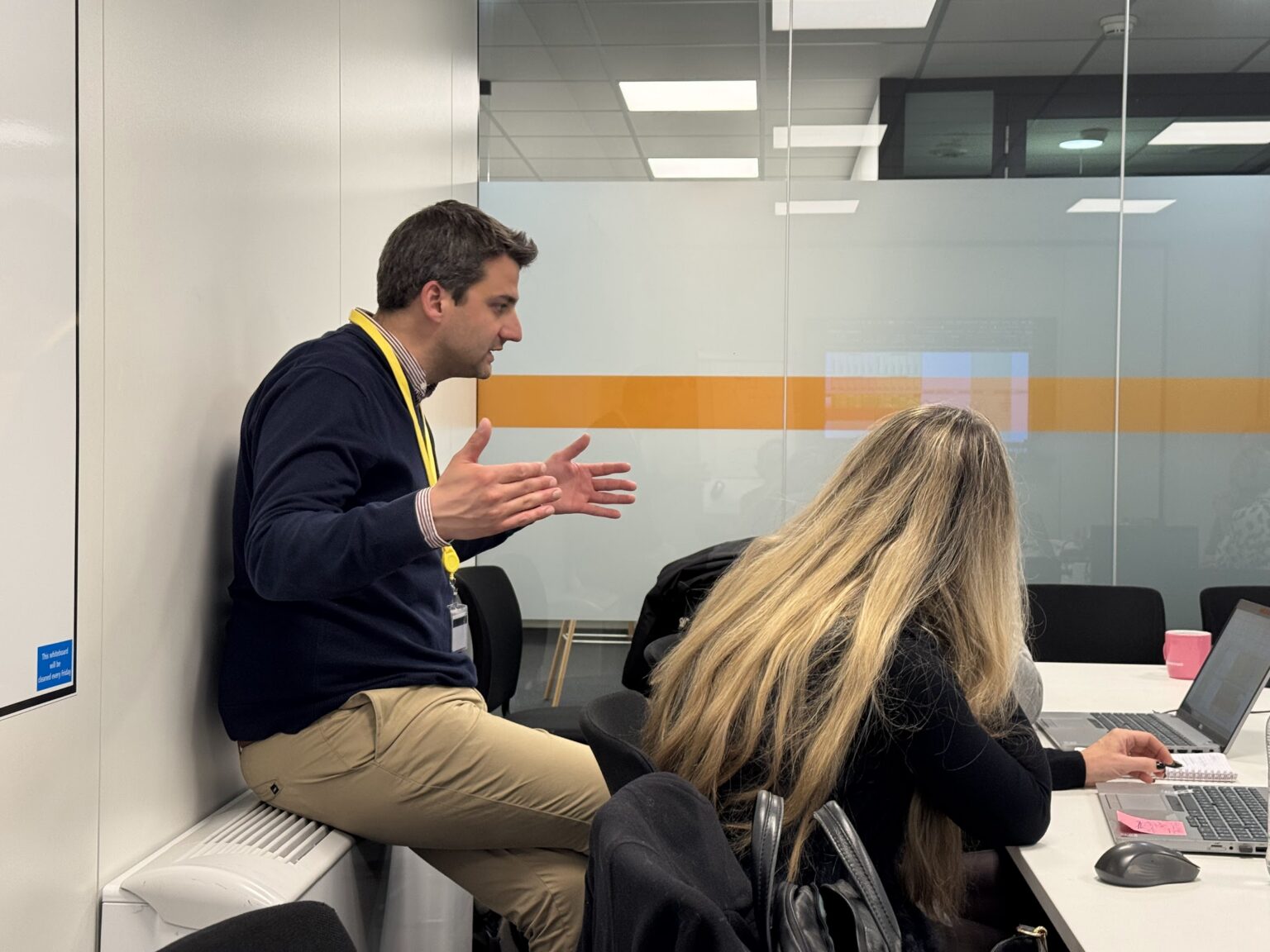
Fabian Tempels in a deal coaching session with a salesperson at her laptop.
Fabian Tempels, deal coaching in progress.

What we work on together

01

Qualify without complacency.

Four questions: is there a real opportunity, can we play a role, can we win, and is it worth winning? Each breaks down into five criteria, from available budget to the strategic value of the deal. The grid compares your position with your competitors', and it is revisited at every session: you see what has moved, and what is still to be won.

realwithin reachwinnableworth it
02

Map the decision-makers.

Who really decides, who influences, who supports you and who holds you back. For each person: their level of influence, their stance towards you, who owns the relationship on your side, and the next action to move it forward. Informal criteria and internal alliances often weigh more than the specifications.

decidesinfluencessupportsblocks
03

Build the winning plan.

The value quantified in the customer's terms, the event that forces a decision, access to senior executives, and a sequence of dated actions, each with an owner.

quantified valuetrigger eventdated actions
04

Rehearse before the moment that matters.

A tender defence, a board presentation, a first meeting with a new decision-maker: we run dry runs, playing the customer, until the team is ready.

tender defenceboardnew decision-maker

The devil's advocate,
at every session.

A major deal quickly breeds optimism. The coach plays the opposite role: asking the questions nobody in the team dares to ask, sorting the answers into proven, assumed and unknown, then looking at the deal through the customer's eyes.

What we really know,
and what we assume.

A live deal, as it comes out of a session. Green is proven, gold is assumed, navy is still unknown. The gold and navy boxes become the action plan.

What we know and can prove
What we think we know
What we do not know yet
Under our control
  • Our proposal covers the twelve sites requested.
  • The demo was validated by the production manager.
  • Our price is within the expected range.
  • Does our roll-out schedule fit their plant shutdowns?
Outside our control
  • The budget is approved, backed by an email from the CFO.
  • The decision is announced for the end of the quarter.
  • The CEO supports us.
  • The incumbent competitor is seen as too expensive.
  • Who signs in the end?
  • Does purchasing have its own evaluation grid?

The action plan until the next session

  1. Get a meeting with the CEO to check their support.Sales director, week 1
  2. Ask purchasing for their evaluation grid and the name of the signatory.Account manager, week 1
  3. Test our price range and the schedule with the production manager.Presales, week 2

The decision-maker's four questions

ConfidenceCan I trust this decision?Secured
ResultWhat concrete result for my organisation?To confirm
Buy-inCan I bring the other stakeholders with me?Missing
SimplicityCan we move forward without unnecessary complexity?Secured

Illustrative example of a fictitious deal.

In the field

When it is useful and agreed with you, the coach joins the customer meeting itself. It is the most real application of what was prepared in session. The coach is introduced to the customer as such and observes without intervening. The debrief takes place the same day: first what the person saw for themselves, then what the coach observed, then the next step, agreed before parting.

Vincent Flament, founder of Valorize Solutions, outside a healthcare facility at the start of a field sales coaching session in the medical sector.
Vincent Flament, at the start of a field sales coaching session in the medical sector.

One copilot per opportunity

For each deal we follow, we build a copilot with you inside the artificial intelligence tools you already use. It brings together the qualification and its history, the decision-maker map, meeting notes and commitments. After a meeting, the transcript produces a briefing within the hour: what was learned, what changes in the qualification, and the next step. Before the following meeting, it helps prepare the questions and scenarios. No session starts from a blank page.

How we work

On a time-and-materials basis, deal by deal, with the person or small team that owns it. Each engagement starts from a written baseline: the initial qualification, the stage in the cycle, the decision deadline. Sessions are short, face to face, remote or in the field, and timed before the decisive moments. Each one ends with a dated commitment. When the deal moves into negotiation, negotiation coaching takes over, with the same file and the same copilot.

Which situations

A major tender. A must-win deal. An opportunity that has stalled for weeks for no clear reason. A new decision-maker arriving along the way. A strategic renewal that a competitor has come to contest. A go / no go decision on a deal that is costly to pursue.

What this coaching is not

  • A service where we write proposals in place of your teams.
  • General sales training. Here the tools are applied to a real deal, with its people and its deadlines.

How it fits together

The tools come from Business Boost, our module on qualification, decision-maker management and action plans. When the deal moves into negotiation, negotiation coaching takes over. And this coaching can be part of a Sales Transformation Program, dosed to your team's needs.

Frequently asked questions

What is deal coaching?
Support on a real sales opportunity, from qualification to the start of negotiation. The coach works with the people who own the deal, on their decision-makers, their plan and their meetings.
Do you work with one person or with a team?
Both. A major deal is often carried by a salesperson, a presales expert and sometimes an executive. The coaching brings together those who really have their hands on the deal.
Do you attend customer meetings?
When it is useful and agreed with you. The coach is introduced as such, observes without intervening, and the debrief takes place the same day.
How is it different from negotiation coaching?
The moment in the cycle. Deal coaching covers everything that comes before negotiation: qualifying, positioning, convincing. Negotiation coaching starts when the terms are being discussed.
Do we need an artificial intelligence tool?
The coaching works without one. The copilot is built in the tools you already use, and the licences remain contracted by you with the vendor.
Is management informed of the coaching?
Yes. The coaching is about a company deal, and its progress is shared with management. Personal aspects that may come up in a session stay between the coach and the person, who decides what to share.
Does information about our deals remain confidential?
Yes. We always work under a non-disclosure agreement, and we use the tools with full transparency: you know what is captured, where, and what it is used for.
How long does an engagement last?
As long as the deal: a few sessions before a decisive presentation, or several months for a long sales cycle.

A major deal in progress? A first conversation is enough to see where it stands and what an outside perspective can bring.

Let's talk about your current deals