
Our Transformative Training Methodology

We do not deliver a training. We build a journey with you: it starts from your real situations, it is tested before it is rolled out, and it keeps living long after the last session.

Our values are not a statement of intent. Each one shows up at a precise step of the journey.

  • Co-construction. Your managers write the programme with us, at step 4.
  • Discernment. Six individual interviews before we open a single slide, at step 2.
  • Field expertise. The trainer studies your market before walking into the room, at step 3.
  • Progression. The pilot group corrects the programme before your teams receive it, at step 5.
  • Autonomy. What remains after us is what your teams can do again on their own, at step 7.

Making these things measurable does not change our values. It accelerates what they produce: a deeper and faster transformation, and an autonomy that sustains itself.

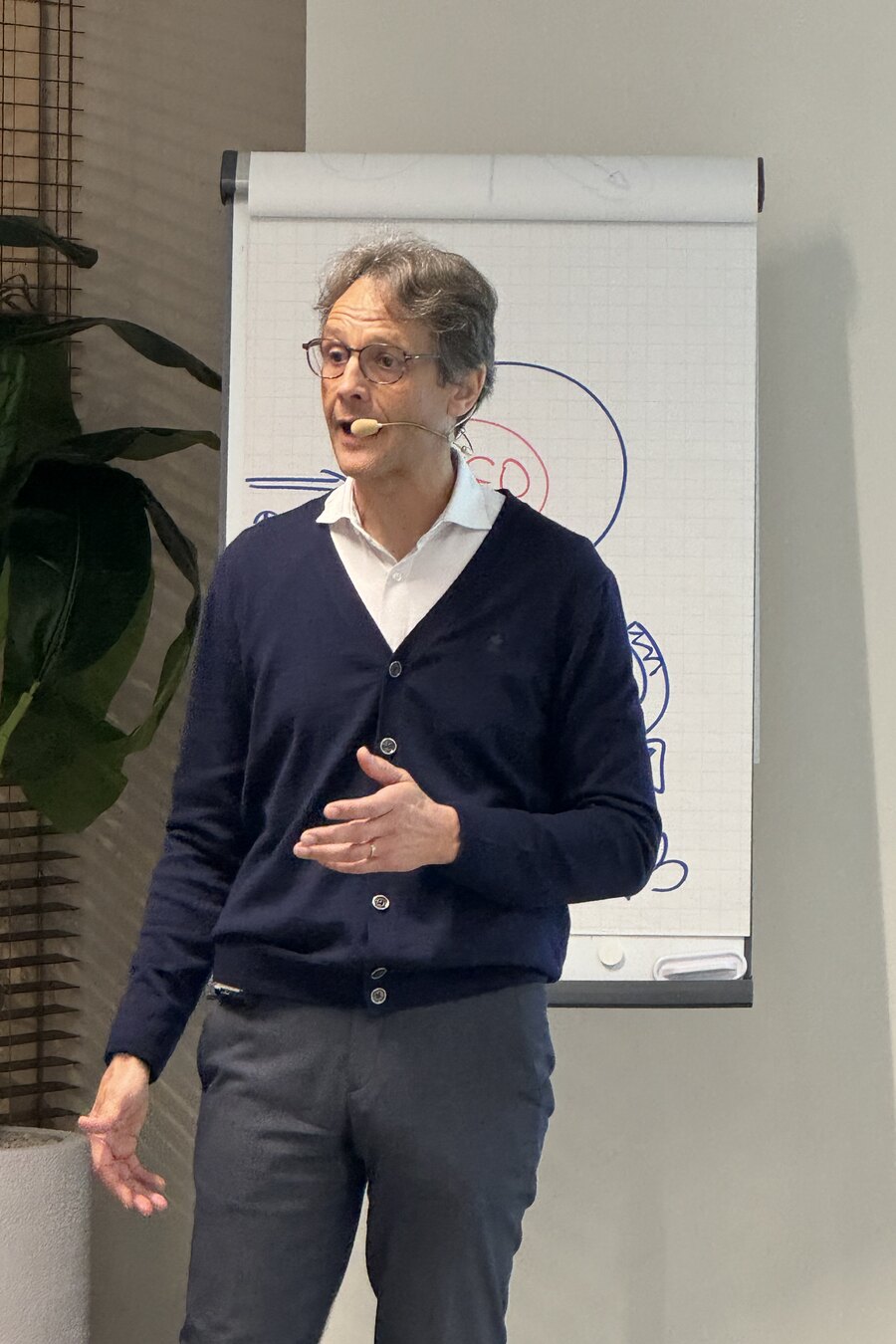
Trainer of Valorize Solutions presenting training methodology of Valorize Solutions
Contactez-nous Valorize Solutions

The seven steps of a Valorize journey

A Valorize journey always follows the same frame. What changes from one client to the next is the content of each step, never the order.

Step 1

Framing and governance

A conversation with the sponsor and the people who own the project: what the company has to achieve this year, what is blocking today, what has already been tried. When the project calls for it, a steering committee is set up from the start, with the managers concerned and, depending on the case, sales enablement.

What this saves you: a programme that answers a training request instead of a commercial issue.

Step 2

Intake interviews

We interview a representative sample of future participants individually. Six interviews are usually enough to surface the real friction points. From them we draw a synthesis, a reading of your competitive position and, where useful, a map of the decision-making unit inside your clients.

What this brings beyond content: a feeling, and the beginning of a relationship. On the day of the training, participants know they were listened to before anyone spoke.

Step 3

Studying your business

The trainer works on your market, your ranges, your cycles, your margins and your counterparts. Not to recite your brochure, but to be able to challenge a value proposition or a negotiation preparation with the same demands as one of your buyers.

What this changes: the trainer speaks your language from the first hour.

Step 4

Building the programme and the materials

The journey is written from what we heard. The cases we work on are your cases: your live deals, your accounts, your value propositions. When several segments are involved, each group gets a trainer briefing adapted to its reality. This is where the co-creation workshops with your managers take place.

What this avoids: the textbook case nobody takes seriously.

Step 5

Pilot group, debrief, adjustment

When the complexity justifies it, a pilot group, usually one of the first groups, goes through the training at full scale before the rollout. Immediate debrief with the managers, feedback report, participant survey, then adjustment.

What this guarantees: the programme rolled out to all your teams has already been tested and corrected.

Step 6

Rollout and continuous improvement

The rollout runs group by group or segment by segment, in interactive sessions where people work standing up, in sub-groups, on real situations. Each session feeds the next one: a new objection, a formulation that works better, a case that resonates more. A global training report is produced for each population.

What this produces: the last group gets a better training than the first, and you can see it.

Step 7

Anchoring and applied follow-up

After the training, the work continues. Keep-It-Alive sessions with the teams, exchanges with managers, team leaders and sales enablement in the following weeks and months, individual field coaching, availability on specific opportunities, support during a deal, a sales cycle or a negotiation. Then an annual review and a roadmap for the following year when the relationship settles in for the long run. And depending on the tools you have and the framework you set, that anchoring can also become measurable, over time.

What this avoids: the training that evaporates in three weeks.
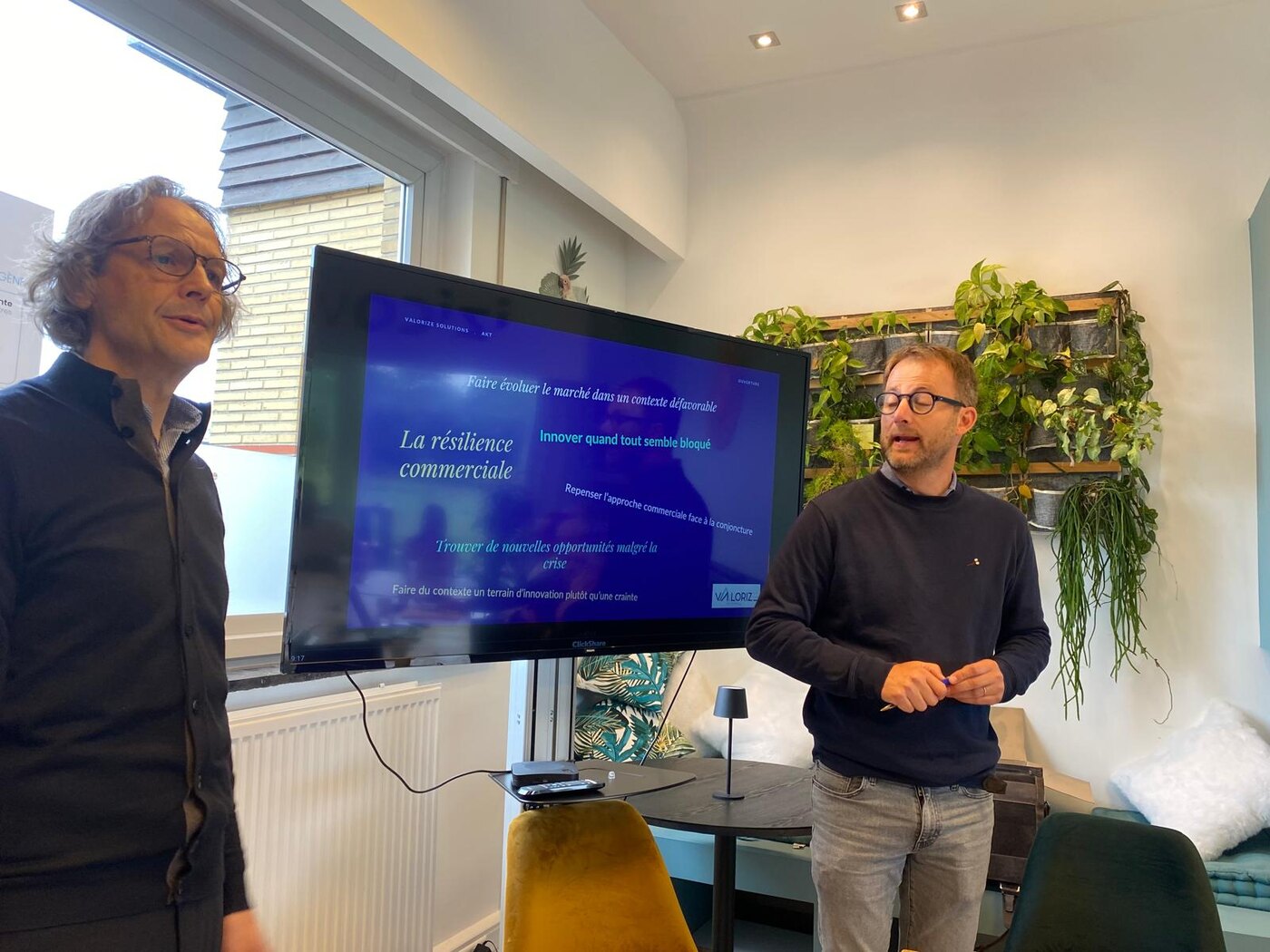
A Valorize Solutions session facilitated by two people, with a co-trainer from the client side, on sales resilience
A session facilitated together with a co-trainer from the client side. Co-creation does not stop at preparing the programme.

When anchoring becomes measurable

Behaviour change is the hardest thing to measure in sales training. Many programmes give up on it and fall back on satisfaction scores, others promise a revenue effect that nobody can isolate. We take the problem from the other end: we look at the conversations themselves, with the tools your teams already have.

What is workable in your organisation is not a technical question. It depends on your internal policies, your acceptable use rules, the agreements you have with your teams and their representatives, the features actually available in your tools, and the tools you might choose to put in place. That is where we start, and we build what is possible inside your framework rather than rolling out a standard set-up.

We do not supply these tools. What we bring is knowing them because we use them every day, and knowing how to embed them in a process. Frameworks that carry your method, routines that hold after the training, and a defined place in the programme.

Three possible moments

Live, during the meeting, when the context and your rules allow it. Just afterwards, in the car, going back over handwritten notes out loud while everything is still fresh. Or later, cold, on an account someone wants to prepare properly.

The second is the one we usually advise starting with. Five minutes of dictation, and what would have stayed in a notebook becomes usable: what was said, what was sensed, what still needs checking, what was promised and by when.

The useful comparison is not with a recording, it is with what happens today: a report written three days later, because it has to be done. Five minutes after the meeting, memory is still intact: the tone, the hesitation about budget, the sentence slipped in on the way out, what was promised without thinking. Three days later, what is left is the main facts and a summary that looks like every other one.

And it is not only a better written report. The same dictation can produce the report for the client, the note for the CRM, the debrief for oneself and the preparation of the next meeting. What used to be four separate tasks, each pushed back to later, becomes a single five-minute action whose outputs you review.

It does not replace listening to a real conversation, and it does not pretend to: what you get is the salesperson’s reading of the meeting, not the client’s exact words. It is often a first step, and it has one decisive advantage: it works everywhere. Recording real conversations depends on rules that change from one country to another, and sometimes from one industry to another.

After a conversation, a debrief

Whether a conversation was recorded or simply told out loud afterwards, a tool can draw feedback from it for the salesperson: how they used the method, what they could have done differently, the topics they opened without digging into them, the ones worth raising next time.

It is the trainer’s debrief, available after a meeting and no longer only on training days. Depending on what you already use, it comes from your conversation platform or from your company assistant. We recommend that this feedback stays with the salesperson, and we set that as the starting rule.

A reading that compares, over time

The debrief helps on a single meeting. Progress, though, is read over time. At regular intervals, the salesperson receives a reading of their own conversations that compares with the previous period instead of starting a new diagnosis each time: their current priorities, how their meetings are evolving, what they prepare beforehand and what they follow up afterwards, the areas they explore little or not at all.

Frequency is not universal. It depends on what you are trying to move, on what you measure and on the ambition you attach to it. A simple habit shows quickly, a posture takes longer.

Their manager receives a summary of a different kind: aggregated, anonymised, on what the team explores, what it avoids, and what deserves collective work rather than an individual reminder. The rule we set at the start, and recommend keeping, is that individual feedback does not travel upward by name.

Measuring is not the goal. What measurement produces is faster progress, because everyone sees where they stand without waiting to be told.

Our four working formats

A Valorize Solutions trainer leads a session in front of a flipchart carrying a hand-drawn diagram
The diagram is built in front of the group. That is what separates a workshop from a presentation.
Valorize Solutions Value Collaboration

Co-creation Workshops

Your managers build the journey with us, at step 4. They leave with the vocabulary, not just with the schedule. And when they wish to, they co-facilitate part of the sessions.

Valorize Solutions Value Commitment

Dynamic interactive training

People work standing up, in sub-groups, on real situations. The trainer speaks for a minority of the time.

sliders-green

Keep-It-Alive Sessions

Short sessions after the training to reactivate what was learned, at the moment the field puts it back in play.

Valorize Solutions Value Innovation

Individual Field Coaching

At a client, on a call or in negotiation preparation. The trainer watches, then debriefs one to one.

Your tools, loaded with your method

This is not a fifth format, it is something that runs across the four. From the first hours of a training, the tools you already own come into the exercise, and they come back out loaded with what we have learned together: your vocabulary, your offers, your segments, and what you want to see change in your teams. Every format is strengthened by it, none of them is altered.

We are an advisory and training firm. The tools are yours: you choose them and you buy them. We use them daily, and we know how to turn them into routine.

See it in a little more detail: your people, your processes, your methods, your tools, and how they drive each other.

A programme that applies these seven steps

Sales Transformation Program

Six months of application on your live opportunities and negotiations.

It is the programme where anchoring and applied follow-up take up the most room: one individual session every two weeks per person, client meetings we attend, and behaviours counted before and after.

See the programme

What it asks of you, an illustration

  • A 90-minute framing meeting with the sponsor and the managers concerned.
  • Around six one-hour interviews with a representative sample of participants.
  • Access to your commercial materials and, where possible, to a few live deals.
  • One steering committee per quarter when the project calls for it.
  • The presence of the managers at the pilot group debrief.

What it produces

  • A training report per population, documenting what was worked on and what still needs work.
  • Teams that leave with their own cases solved, not with a binder.
  • When a measurement set-up is in place, a measured gap over the observed period, on behaviours you have chosen as targets yourself. It is a measure of behaviour, not of commercial result, and we present it as such.

Two typical journeys

Two situations we meet often. They are anonymised and reconstructed, and they point to no client in particular.

Journey A

A food group, sales force facing retail chains

The issue: the annual negotiation with the retail chains, run every year by the same people, with margins that keep shrinking. A steering committee brings together the sales director, two managers and sales enablement. Eight intake interviews reveal that the problem is not negotiation technique, but value, insufficiently established before the price discussion. The programme is rebuilt around that sequence: value first, negotiation second. A pilot group tests it, two cases are replaced. Rollout by customer segment, then an annual review before the next campaign.

Journey B

A B2B services organisation, several sites, several languages

The issue: commercial conversations that stay at the level of the expressed need and never reach the decision maker. Managers are briefed upfront so they know what they will have to sustain afterwards. Six intake interviews, plus a map of the decision-making unit inside three representative clients. The journey works on questioning and posture before technique. Rollout in waves, in the mother tongue of each group, with in-deal support on real opportunities during the following three months.

Frequently asked questions about our methodology

How long does it take between our first contact and the first session?
Count three to six weeks for a journey built to measure. Framing and intake interviews take most of that time. A standard module can start faster, but it produces less.
What does it ask of us?
A framing meeting, around six one-hour interviews with your people, access to your commercial materials, and the presence of your managers at the key moments. It is a real investment in time, and it is what separates a training from a journey.
Can our managers co-facilitate the sessions with you?
Yes, and it happens regularly. A manager, a subject expert or a senior salesperson on your side can co-facilitate part of a workshop, co-build the business cases the group will work on, or co-coach the sub-groups during role plays. The condition that matters is that they know the run of the session in advance: this is prepared at the framing meeting, then in the co-creation workshop at step 4, where the programme is written with your managers. The two voices do not bring the same thing. The trainer brings the method, examples from other sectors and the licence to challenge. The co-facilitator brings the internal context, the history of the accounts, and the continuity once we have gone: whoever co-facilitated can run the sequence again six months later with new joiners. We do not propose it to reduce the cost of the programme, because preparing a co-facilitator takes time on both sides. What justifies it is the anchoring.
Do you work on our real deals or on textbook cases?
On your real deals. Your live opportunities, your accounts, your value propositions, your objections. The trainer has studied your market before walking into the room, precisely to be able to challenge you on your own situations.
Is the pilot group mandatory?
No. We propose it when the population is large or heterogeneous, or when the stakes are high. And in the vast majority of cases it does not cost an extra session: one of the first groups takes on that role. That group receives the full training, not a draft. What changes is that we ask this first population to be a little more active in its feedback, which produces one or two adjustments for the groups that follow. It is co-creation carrying on, once the programme is in the participants’ hands.
What happens after the last session?
Keep-It-Alive sessions, exchanges with managers and sales enablement, individual field coaching, and availability on specific opportunities. When the relationship settles in, an annual review and a roadmap for the following year.
Do you train face to face, remotely, or both?
Both, face to face and remotely, synchronously and asynchronously, and in the mother tongue of the participants whenever possible. We train teams spread across several countries.
Our salespeople do not fill in the CRM. Can that change?
This is one of the most immediate effects, and it is often the one that wins the teams over. When the conversation, recorded or simply told out loud after the meeting, produces a draft report, the salesperson reviews and approves instead of writing from memory in the evening. Twenty minutes of data entry become three minutes of review, and nothing leaves without their agreement. What really changes comes next: a CRM that gets filled becomes a CRM that serves. The preparation of the next meeting rests on what was actually said the previous times, and your other tools, including your artificial intelligence assistants, work on reliable material instead of empty fields. What is possible depends on your CRM, on the available integrations and on the rules you set. And we do not promise that administrative work disappears: we change its nature.
Do we have to record conversations with our clients?
Not necessarily, and it is generally not where we start. The simplest mode is to dictate your notes just after the meeting, which requires no recording of the client and is already enough to produce a useful debrief. Going further and recording real conversations depends on your internal policies, your acceptable use rules, the agreements you have with your teams, what your tools allow, and rules that vary from one country and sometimes one industry to another. These points are settled before the start, with your compliance function and your employee representatives, not afterwards. In the training itself, on role plays, we set the principle that feedback belongs to the participant.
Do you measure what the training actually changes?
When a measurement set-up is in place, yes, on behaviours, and through two different loops. After a conversation, the salesperson receives a debrief that belongs to them. At regular intervals, a reading compares conversations of the same kind on criteria you have chosen: the depth of questioning, the topics opened, the commitments made and dated. We do not claim the effect on revenue, because it depends on too many things beyond your teams. A movement is only flagged above a threshold. Below it, the report says stable, which is more useful than an invented variation.
Is this used to appraise our salespeople?
That is not what we build it for, and we help you set the rules that prevent it: a debrief that stays with the salesperson, a management report produced separately and aggregated, a minimum number of conversations and of people below which it is not produced. The rest is a matter of your configuration and your internal rules, subjects on which we do not intervene. What we do share is what we observe: a measurement set-up that turns into a control device stops measuring, because everyone adapts to what is counted.
Do we need to buy a tool to work with you?
Not at all. Our rule is to adapt to what you already have. It does happen afterwards that we suggest something, think it through with you, open a door you had not considered, based on what we see elsewhere: that is the role of a thinking partner and of a specialist in developing sales teams. The choice and the purchase remain yours.

The modules that give the method its substance

We are committed to understanding your business needs deeply and exceeding your expectations. Our team of industry experts brings years of experience and a fresh approach to training, encouraging innovative thinking and new possibilities.

Contact us now to embark on a transformative training journey.