
Piece de puzzle LeadershipEdge

Manage & Coach

Coaching skills for Managers and Sales Professionals

Contactez-nous Valorize Solutions
Table of Contents

Brief overview

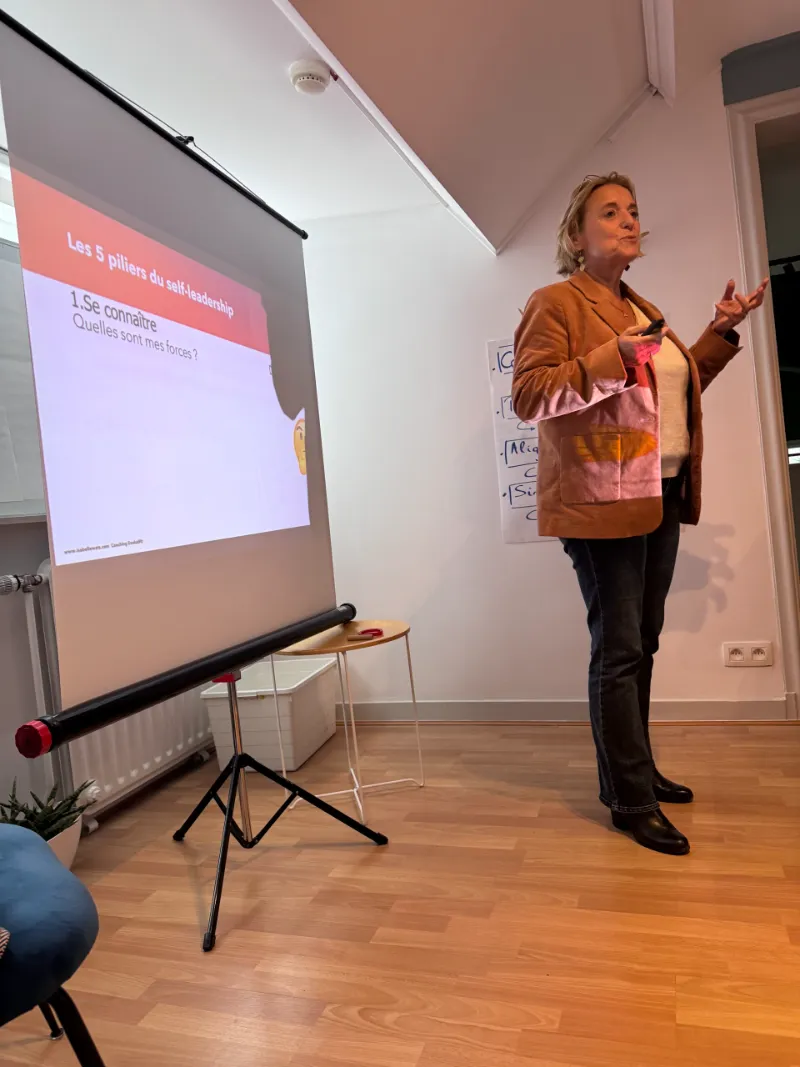
Isabelle Wats, coach at Valorize Solutions, runs a Manage & Coach session on the manager-coach posture for a team of sales directors.
Isabelle Wats of Valorize Solutions, running a Manage & Coach session with a team of sales directors.

In many companies, people are promoted to management because they were strong individual contributors. The logic seems obvious: if someone is a great salesperson or expert, they should be able to lead others. In reality, the transition is often much harder.

Many managers find themselves in a difficult position. They want to help their teams perform, but they often fall into the same pattern: giving solutions too quickly, taking over the problem or telling people what they should do.

In the short term it works. In the long term it creates dependency, limits autonomy and leads to frustration.

The « Manage & Coach » module helps managers step back from this reflex and develop a different approach: the manager-coach postureInstead of solving every problem themselves, managers learn how to guide conversations that help people think, clarify their objectives and take responsibility for their actions.

The same approach is also extremely valuable for sales professionals. When salespeople adopt a coaching posture with their clients, conversations become deeper, more strategic and more valuable. Instead of pushing solutions, they help their clients step back, think things through and find the best way forward themselves. In a world where products and services are increasingly comparable, the quality of the conversation often makes the difference.

This module is delivered by Professional Certified Coaches, ICF members.

Manage & Coach trains your managers. Here is what can make their posture easier to hold.

  • Support the deployment : a coaching posture settles more easily when it has a rhythm and a frame. We install that rhythm with your managers, then hand it back to them on a known date.
  • Design commercial governance : a manager coaches more willingly what the organisation explicitly asks them to follow. When expectations stay implicit, the posture tends to erode.

Duration

Objectives

Course content

Participants will explore the different roles they play in their daily interactions: manager, mentor, trainer and coach.

They will learn when each posture is useful and how adopting a coaching approach can help develop autonomy, responsibility and stronger decision-making, whether with team members or clients.

A good coaching conversation does not happen by accident.

Participants will discover a simple framework that creates the right environment for open and constructive dialogue.

The BRIC principles guide this framework:

  • Be kind

  • Respect

  • Involvement

  • Confidence

These principles help managers and sales professionals hold conversations that are both demanding and supportive.

One of the key tools introduced during the workshop is the AME method (Action – Method – Emergence).

This structure helps participants guide conversations in a clear and practical way:

  • clarifying the objective

  • identifying obstacles or challenges

  • exploring options and new perspectives

  • defining concrete actions and commitments

The goal is simple: instead of saying “Here is what you should do,” the leader helps the other person build their own solution and commit to it.

Many conversations fail because people listen only to respond.

Participants will learn how to listen differently and ask questions that open new perspectives.

These skills are particularly valuable in situations such as:

  • one-to-one meetings with team members

  • performance discussions

  • post-meeting debriefs

  • complex client conversations

The techniques learned will be applied directly to the situations participants face in their day-to-day work.

For managers, this includes:

  • helping a team member find their own solutions rather than giving the answer

  • leading one-to-one conversations that result in clear decisions

  • handling a difficult situation without avoiding the issue or creating unnecessary tension

  • addressing a behavior while maintaining the relationship

For sales professionals, the focus is on:

  • helping a client who is hesitating put into words what is really blocking their decision

  • moving a discussion forward when the client remains vague or doesn’t commit

  • reframing a conversation that shifts too quickly to price or solution

  • turning a meeting into a genuine moment of reflection for the client

Outcomes

Who should attend?

And after the training

A sales manager wears five hats: team leader, sales director, performance lead, coach, pilot of the numbers and the efforts. This module works on each of them. For them to hold together, you need cadences, a structure, what is sometimes called team governance. Without it, the one-to-one and the weekly meeting run on empty.

This is what we call the gearing: your people, your processes, your methods and your tools driving each other, with as little friction as possible. We work on this part separately, in advisory, before the training or after.

And one-to-one? Leadership Coaching takes these tools into one-to-one work, with a professional coach. Discover Leadership Coaching

Frequently asked questions

Rarely one hat, rather all five at once: team leader, sales director, performance lead, coach, pilot of the numbers and the efforts. The module works on each of them, and above all on the coach posture, the one that makes a team progress the way a coach makes players progress. What is missing next is the cadences to hold them together: the one-to-one, the weekly meeting, what is sometimes called team governance. This is what we call the gearing: your people, your processes, your methods and your tools driving each other, with as little friction as possible. We work on this part separately, in advisory, before the training or after.

The manager decides and steers, the coach makes people progress. Both are necessary, and it is the switch from one to the other that is hard: moving from directive management to a posture that asks questions instead of giving answers, that really listens, and that lets the salesperson build their own action. Like the coach of a professional team, the manager-coach seeks to get the best out of everyone, and structures their exchanges with a method. The module trains this on real situations.

Three, at a minimum. The one-to-one, regular, where you talk about the person and their accounts. The team meeting, short, which arbitrates on facts rather than on impressions. And the effort review, which looks at what was done, requests, meetings, open topics, rather than waiting for results, which come too late to correct. This is what is sometimes called team governance, and it is what holds the five hats together.

Discover our methodology

Curious to see how this could help your managers or sales team? Let’s talk.